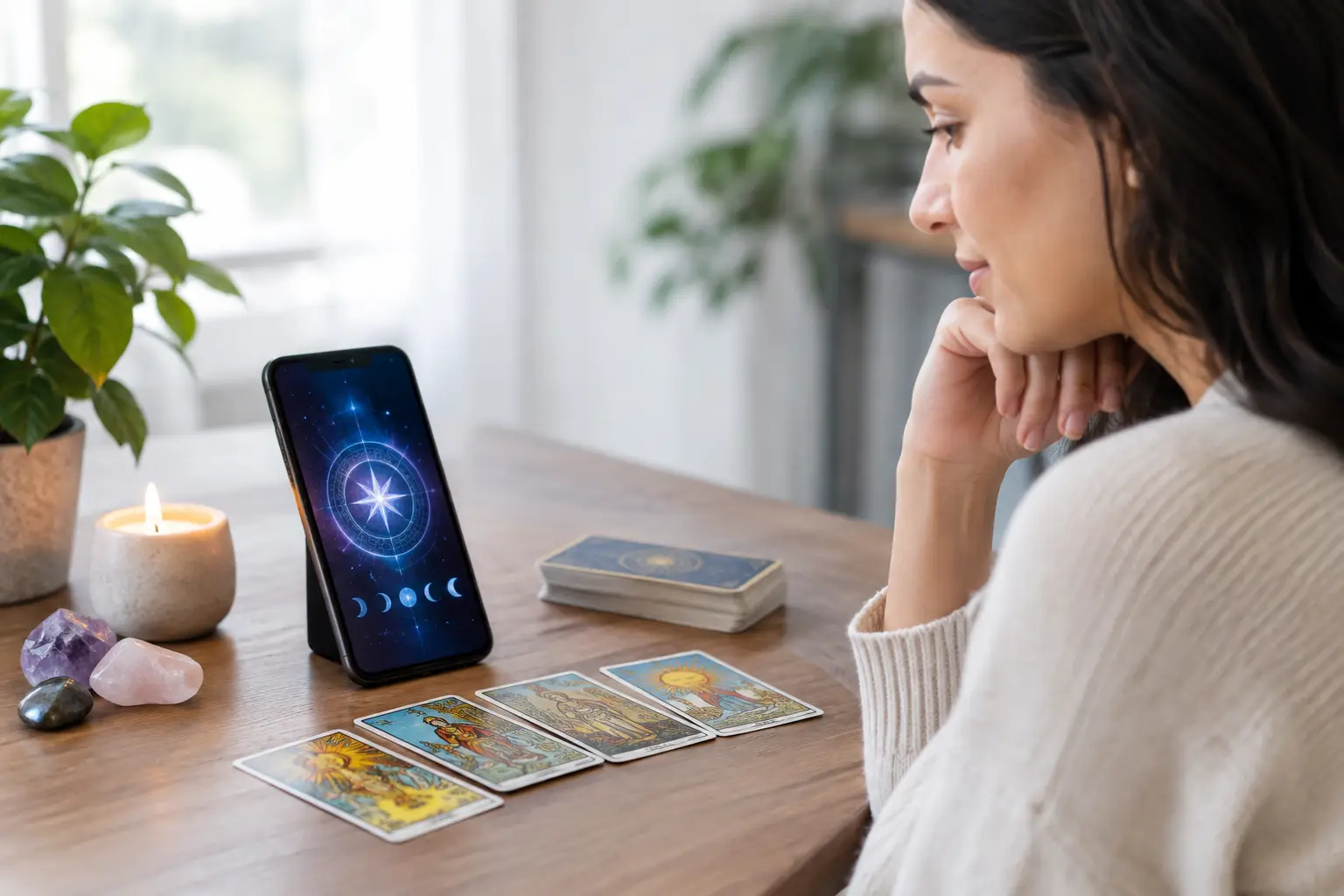
A late-night question about a relationship rarely needs a lecture. It needs a pause, a little perspective, and language for the feeling you cannot quite name. That is where many people begin asking, how does AI tarot work? The short answer: it combines tarot’s symbolic card language with an AI-guided conversation shaped around your question.
It is not a crystal ball in your phone, and it does not replace your own judgment. AI tarot is a reflective tool - one that can help you notice patterns, consider possibilities, and meet a moment of uncertainty with more curiosity than fear.
How Does AI Tarot Work Behind the Reading?
An AI tarot reading usually begins with an intention. You might ask, “What do I need to understand about this connection?” or “What energy should I bring to my next career move?” Your question gives the reading an emotional center. It tells the experience what you are trying to hold, decide, release, or understand.
Then, cards are selected digitally. Depending on the platform, this may happen through a randomized system, a tap or shuffle interaction, or a guided spread designed for a particular question. The digital format changes the mechanics of drawing a card, but not the symbolic foundation. The imagery and traditional meanings of tarot remain the language of the reading.
Each card carries themes rather than one fixed prediction. The Two of Swords may invite you to look at indecision. The Tower can point to disruption, truth, or a structure that can no longer hold. The Star may bring attention to hope, recovery, and a future that is still forming. A card’s meaning shifts with its position in a spread, the question you ask, and the details of your life.
This is where AI enters. It uses the cards drawn, your prompt, and the structure of the spread to create an interpretation in clear, personal language. Instead of receiving a generic paragraph for each card, you can receive guidance that connects the symbols to the situation you brought forward.
AI connects symbols to your real question
Traditional tarot has always involved interpretation. A reader considers the cards, the spread, the seeker’s question, and the relationship between the symbols. AI-guided tarot applies a digital version of that interpretive process.
The AI is trained to recognize patterns in language and draw on established tarot meanings. It can frame the cards around themes such as boundaries, communication, grief, self-trust, change, or timing. If you ask about a relationship, for example, it may focus on emotional dynamics rather than treating the same cards as a career reading.
That responsiveness is the appeal. A static card description can be interesting, but it may leave you wondering, “What does this mean for me?” AI tarot is designed to make room for that question. It can turn a familiar symbol into a more relevant reflection, without requiring an appointment or the pressure of sharing your private thoughts with another person.
What AI Tarot Can and Cannot Tell You
A meaningful tarot reading is not about handing your power to a card, an app, or an algorithm. Its value is often in the questions it opens. Why does this interpretation feel true? What have you been avoiding? Where do you already know what you need, but need permission to listen?
AI tarot can offer language, perspective, and a gentle nudge toward self-reflection. It can help you identify the emotional thread running through a confusing situation. It can also be a comforting ritual when you need a moment away from constant noise and outside opinions.
It cannot guarantee an outcome, read another person’s mind, or make a decision for you. No tarot format can reliably promise that someone will call, that a job will appear, or that a particular future is fixed. Life includes choice, changing circumstances, and other people’s agency.
That distinction matters most when the stakes are high. For medical, legal, financial, or urgent mental health concerns, use qualified real-world support. Tarot can sit beside practical action as a source of reflection, but it should not take the place of care, expertise, or immediate help.
Why Personal Context Changes the Reading
The same card can carry very different messages for different people. Imagine drawing the Eight of Cups. For one person, it may reflect leaving a job that has become emotionally draining. For another, it may suggest stepping back from a relationship pattern that keeps repeating. For someone else, it may simply point to a quiet inner shift: the recognition that an old version of life no longer fits.
AI guidance works best when you give it enough context to meet you where you are. You do not need to share every detail. Even a simple intention such as “I feel torn between staying and moving on” gives the reading more shape than “Tell me my future.”
The most useful prompts are open enough to invite insight and specific enough to honor your real concern. You might ask what you are being called to notice in a conflict, what support you need during a transition, or what belief is keeping you stuck. These questions leave room for agency. They treat tarot as a conversation with your inner wisdom, not a verdict.
A reading can change as you do
People sometimes worry that receiving a different reading on a different day means one of them was wrong. But tarot often reflects the movement of your attention. A question asked in the middle of frustration may reveal something different from the same question asked after a difficult conversation or a night of rest.
That does not make the experience meaningless. It can make it more honest. Your feelings, choices, and circumstances evolve. Returning to a theme over time can show you what has softened, what still needs care, and where you are ready to act differently.
A connected digital experience can support that rhythm. With Soul Oracle, your guidance can travel with you across web and mobile through a shared account, making it easier to return to the questions that matter when they arise.
Is Digital Tarot Less Meaningful Than a Physical Deck?
It depends on what makes a reading feel sacred to you. Some people love the sensory ritual of shuffling, cutting a deck, and laying cards on a table. Others find that a private moment with their phone feels just as intentional - especially when they need guidance while commuting, sitting in a parked car, or processing a feeling before sleep.
A physical deck gives you texture and ceremony. AI tarot offers availability, responsive interpretation, and an easy place to explore a question without needing to know every card meaning first. Neither experience has to compete with the other. Many people use both, choosing the format that fits the moment.
The deeper ingredient is attention. If you approach a digital reading while rushing through notifications, its message may feel flat. If you take one breath, name your question honestly, and allow the symbols to meet you, the experience can become a small but powerful act of presence.
How to Get More From an AI Tarot Reading
Begin with the feeling beneath the question. “Will this work out?” is understandable, but “What do I need to see clearly about this situation?” often creates more useful guidance. Stay open to messages that are supportive without being overly reassuring. Sometimes the kindest insight is not the answer you hoped for, but the one that helps you come back to yourself.
After the reading, notice what lingers. You may want to write down one image, phrase, or emotion that stood out. Let it accompany you through the day rather than demanding an immediate conclusion. A tarot reading does not have to solve everything to be valuable.
When your path feels foggy, ask a question that returns you to your own center. The cards may offer a symbol, and AI may offer words, but the next honest step is still yours to choose.